Tracing It Back
I rarely have a fixed form in my head. I do not draw or design a shape before making it unless it is a commission. But I have been asked often enough what inspires the pots that I thought I had better find out.
And for someone who has spent as much time as I have looking at pots, at the V&A, the British Museum, the Ashmolean, it would be hard to claim that whatever comes off my wheel is entirely my own. I do not often copy a shape. I do seem to absorb them. What follows is an attempt to trace the borrowings back and set them down in one place.
Shapes
Chinese
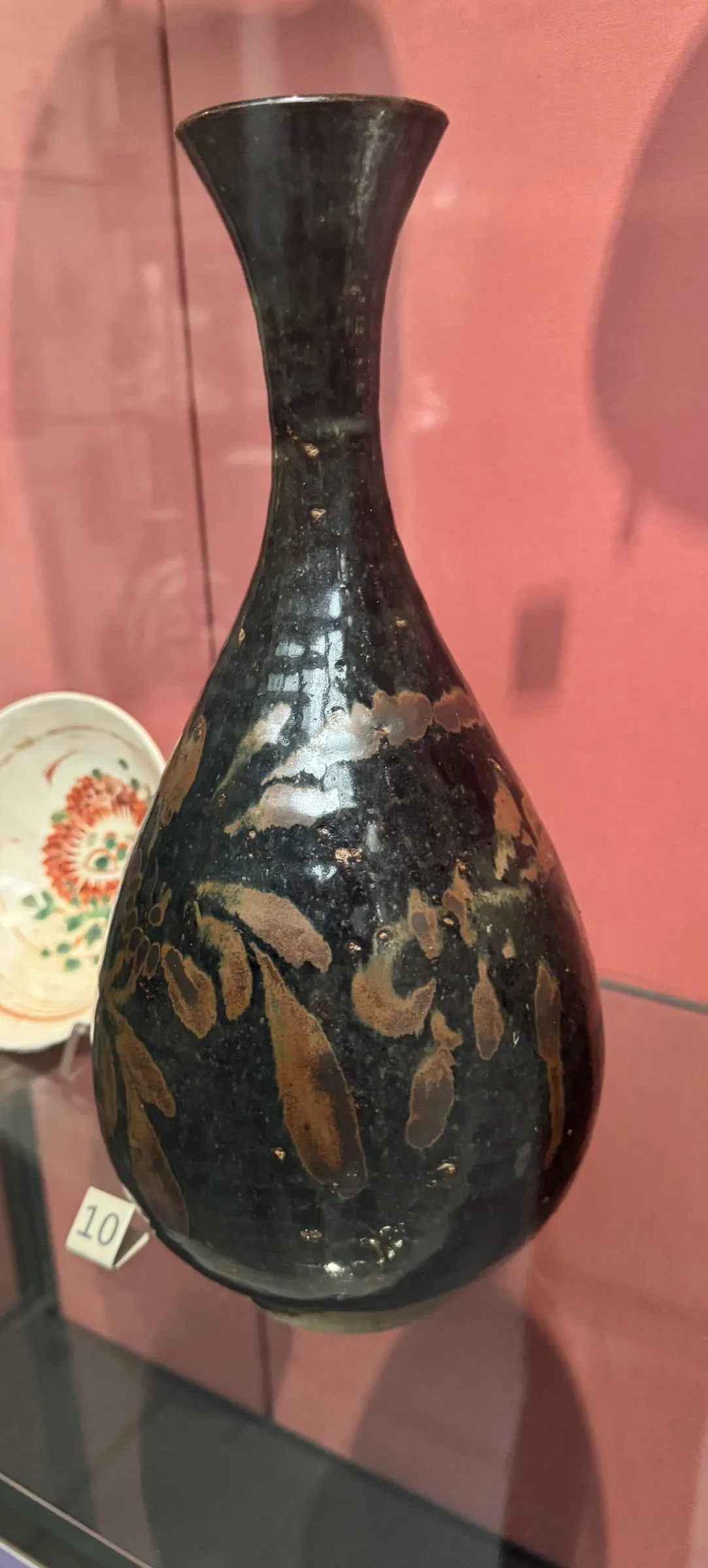
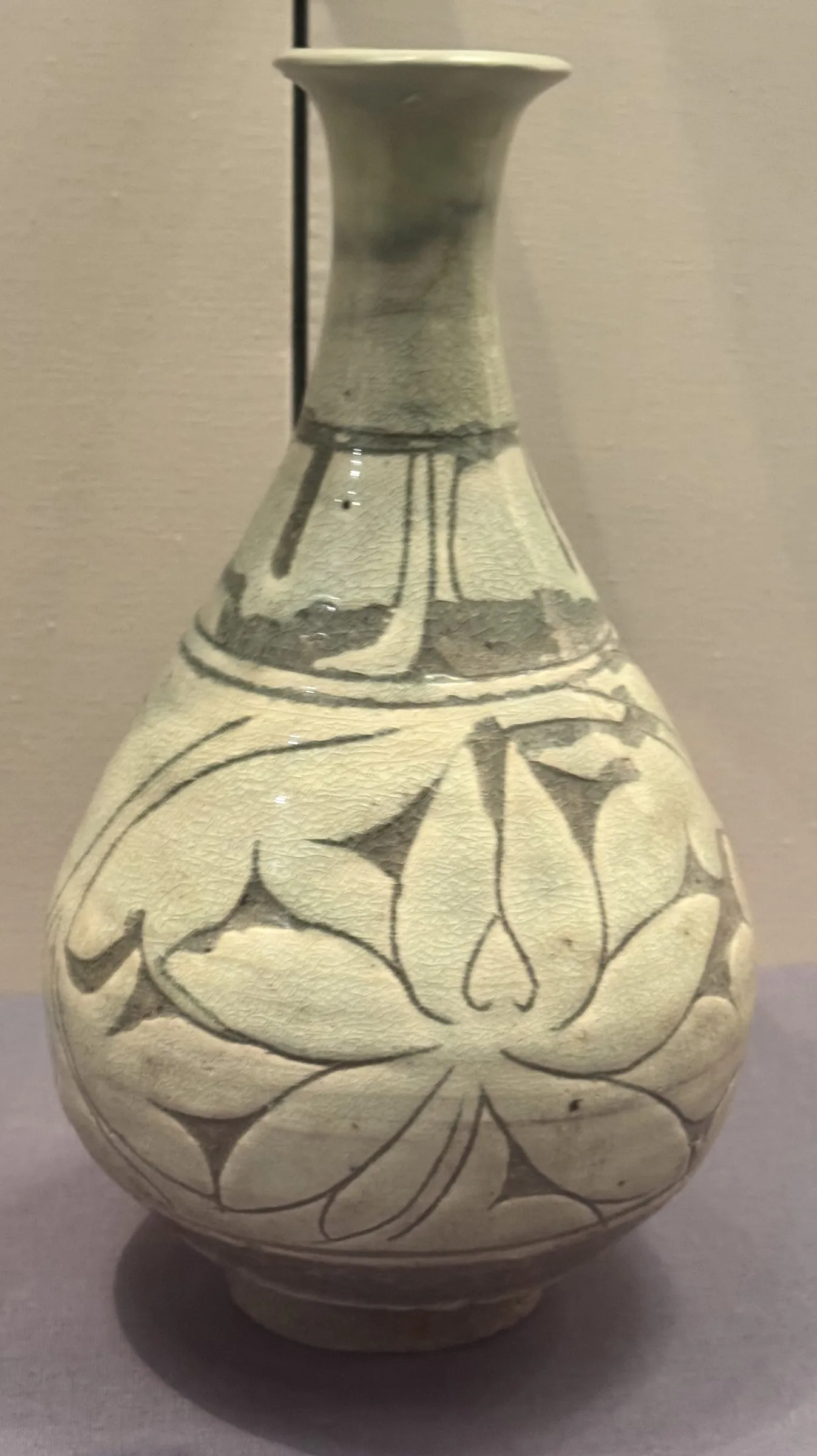
Even if only subconsciously, the vase shapes seem to be Chinese in origin. Chinese pottery stood head and shoulders above everyone else in refinement and sophistication for so long that paying tribute is not really optional, or original. China is the easiest place to point for earlier and more sophisticated bulbous, long-necked vases. The V&A has several: a 19th century stoneware bottle, a Qianlong vase, a creamy-white one and a grey-white one.
None of them do I really copy, or ever tried to copy. And they have their own descendants in Ottoman Turkish shapes.
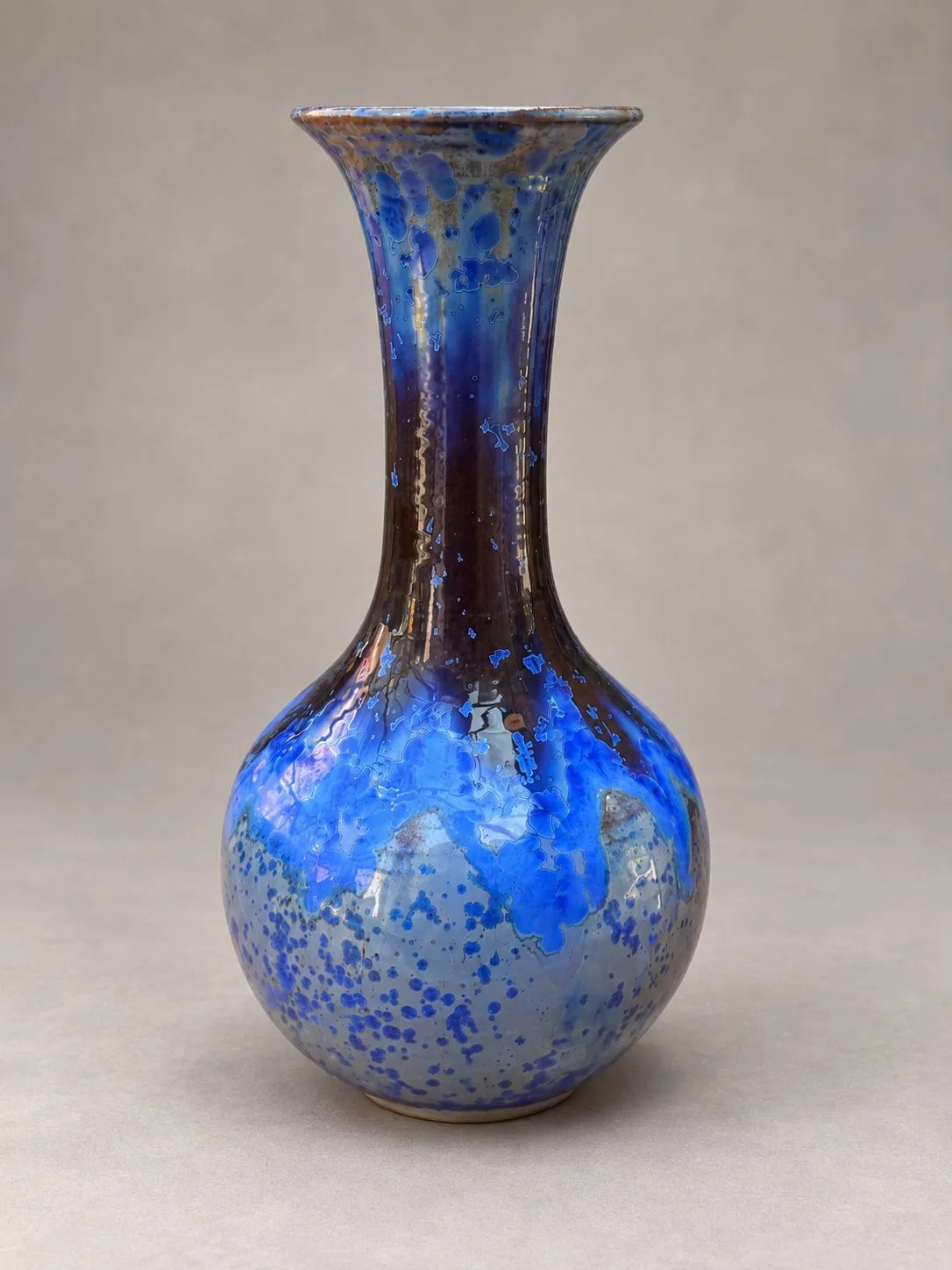
There are two vases I photographed at the V&A on a visit, and for comparison one of mine: a “bulbous body, long neck and flaring mouth”, in the words of the V&A.
Japanese
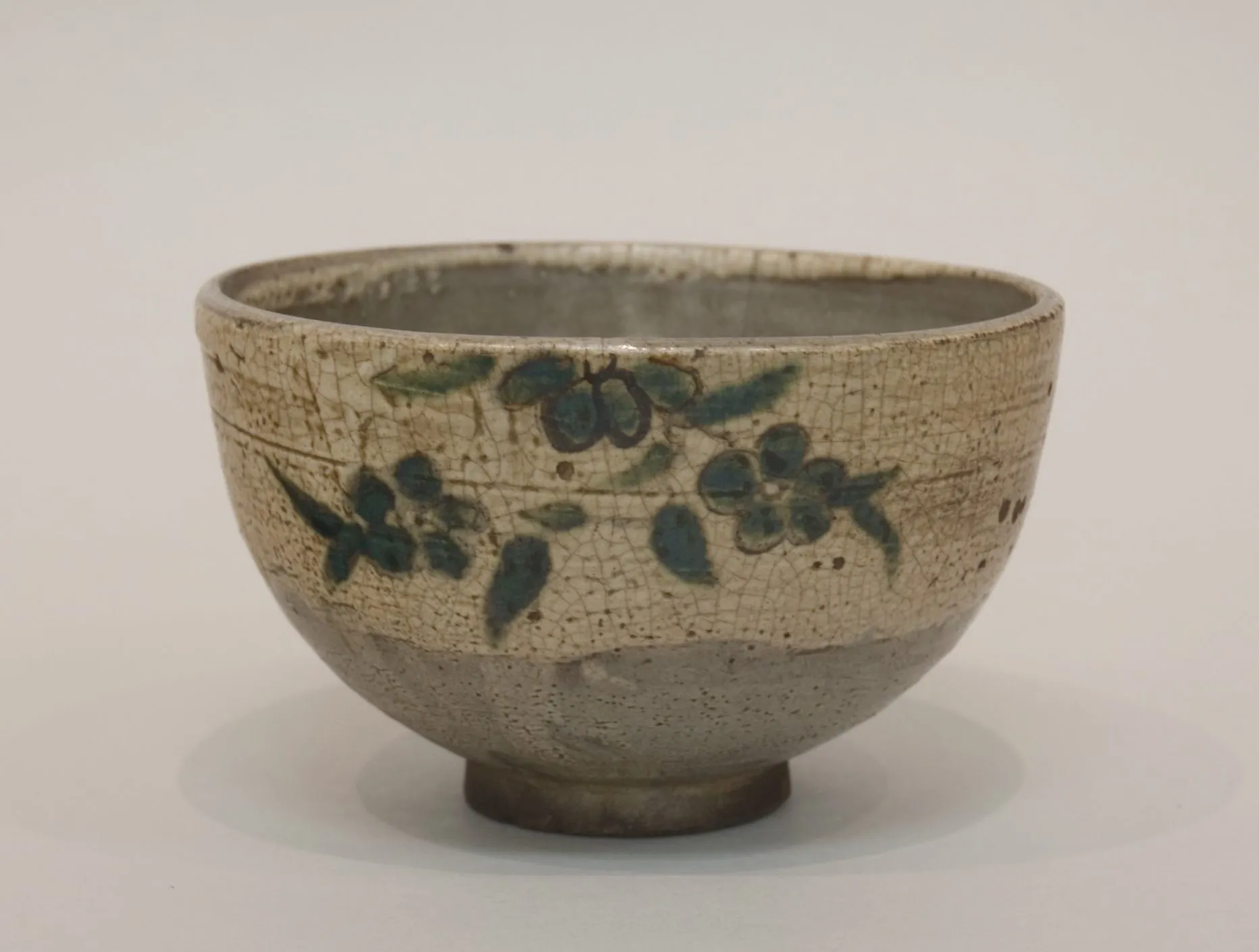
I probably spend a disproportionate amount of time admiring Japanese bowl forms, even though ancient Korean and Chinese ones may well have preceded them. And there is certainly a Japanese aesthetic that has had a massive influence on Western pottery.
Asian societies are bowl-focused rather than plate-focused, and that is where the shapes have been allowed to thrive, from tea bowls to ramen bowls. They are everywhere, and they have been for millennia.
The V&A carries a great trove of them. A Seto or Mino stoneware bowl, and two raku tea bowls from Kyoto: a black one by Ichinyū of about 1700, and a red one of the early 1800s that the museum bought from the Japanese commissioners at the Philadelphia exhibition of 1876. One black raku and one red, and those are the two I like.
Then a Karatsu bowl from the Met of the 1700s, set beside the Song cone above, and the argument is plain.
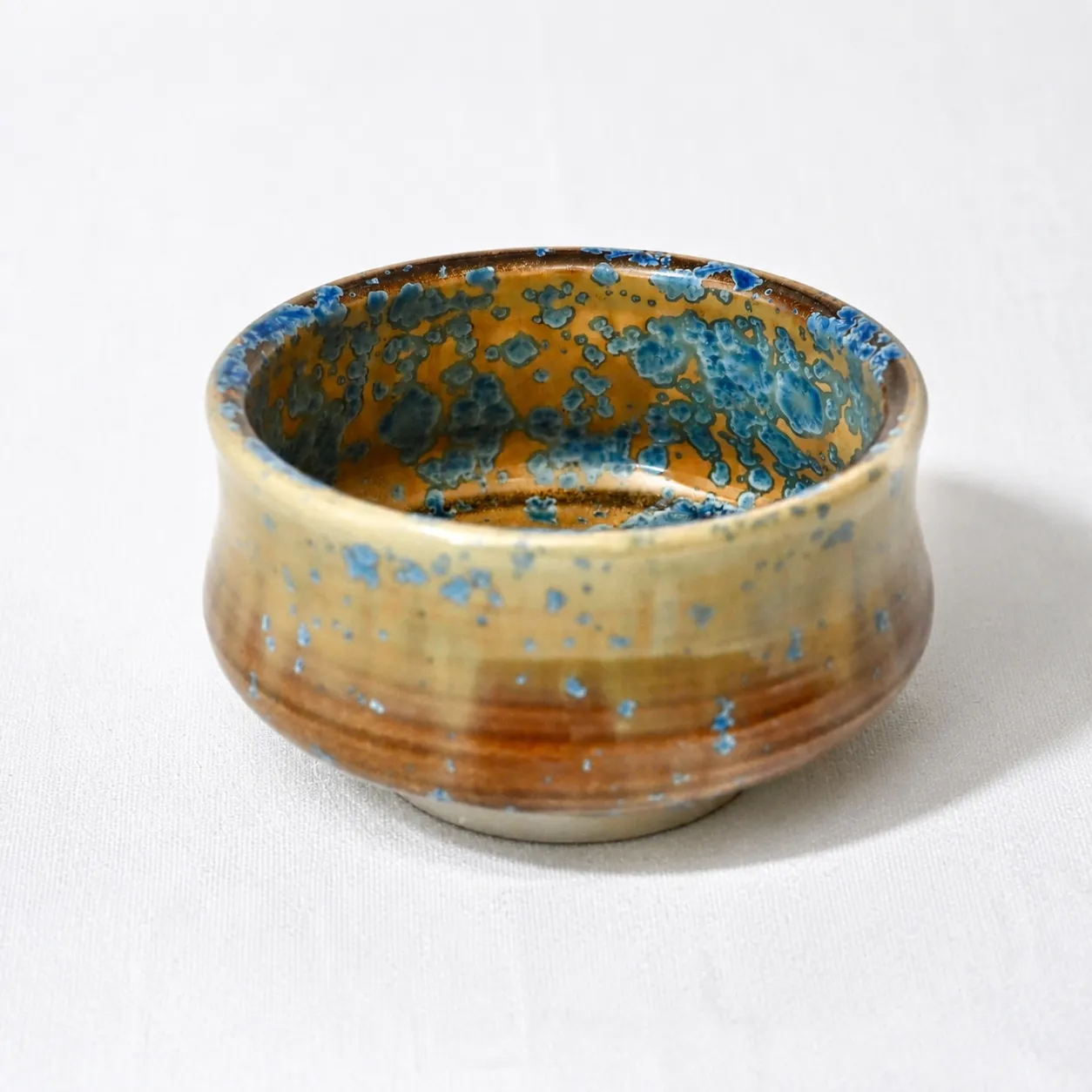
The foot
I carve a foot on nearly everything, because I do not much like a flat form standing straight on the table. The foot ring itself is ancient and more or less universal, so no one tradition owns it. But two traditions did something with it, and they did different things.
In China the underside is something to be read. Turning a pot over is how it gets dated and attributed: the shape of the foot ring, where the bare clay begins, the marks left by whatever it stood on in the kiln.
In Japan it is something to be looked at. That is where the appreciation peaks. Yanagi Sōetsu wrote that anyone who loves tea bowls will automatically turn one over to look at the raised foot, left bare and rough, and take real pleasure in it. The roughness is the point, not something to be forgiven.
Eva Mol, ‘Trying to Hear with the Eyes’, Norwegian Archaeological Review 54 (2021), p. 90, citing Yanagi Sōetsu.
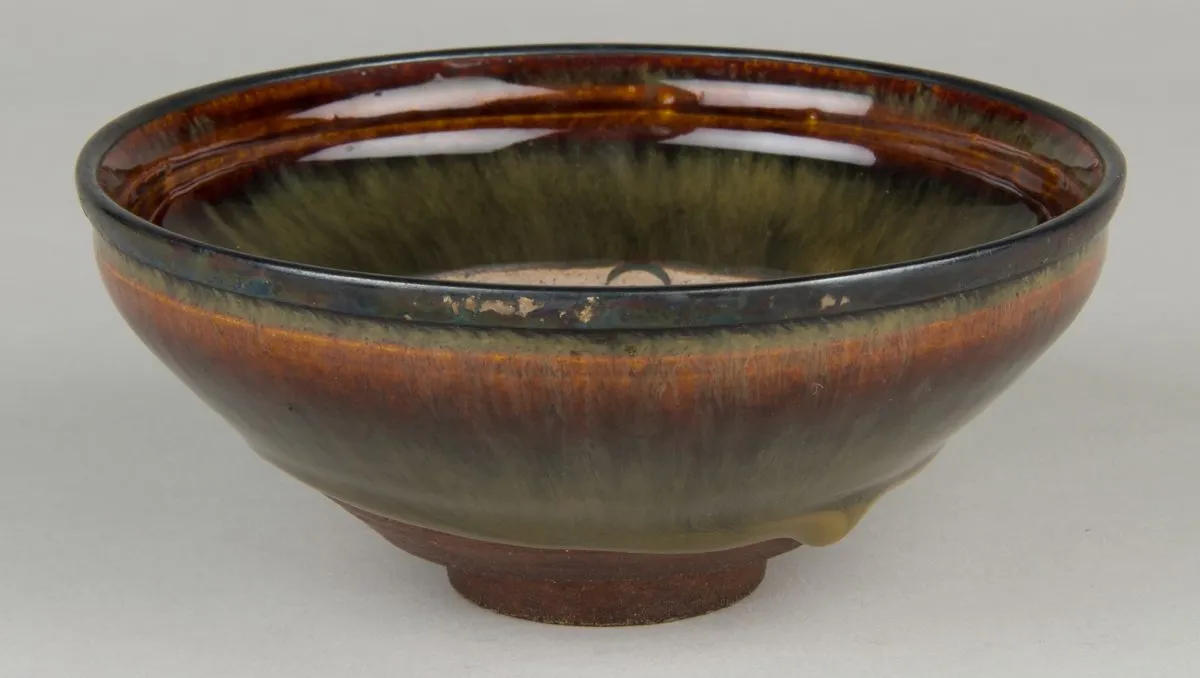 Side
Side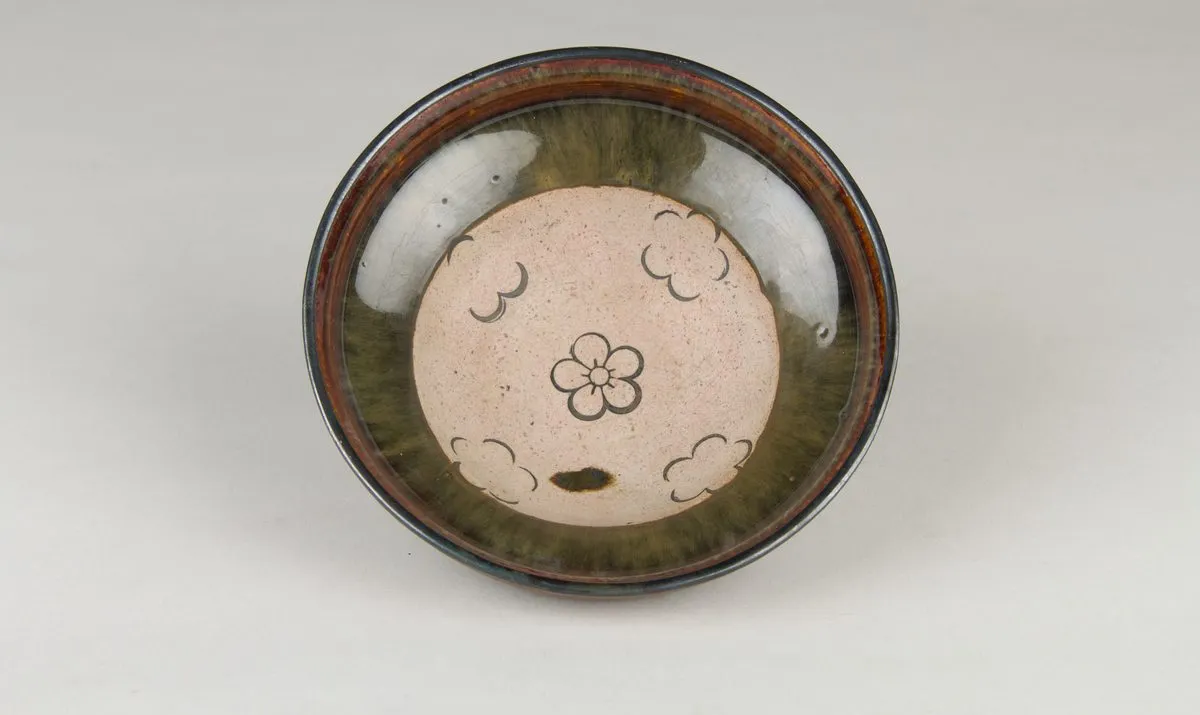 Interior
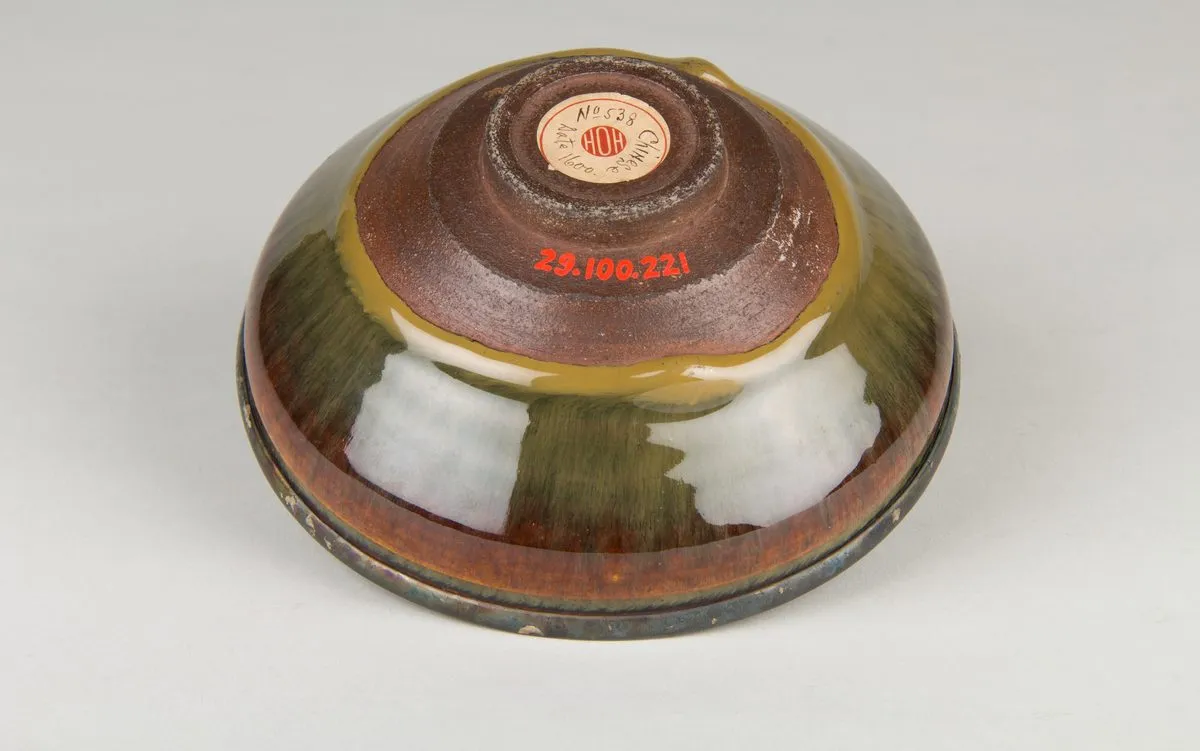 Foot
FootGreek
Greek vases have had an extraordinarily persistent influence on Western ideas of form. Their shapes are imprinted on us almost from childhood, whether encountered in the British Museum or, at the other extreme, among the synthetic classicism of Las Vegas. Amphorae and their many beautiful cousins are broad-shouldered, elegant and vigorous to the eye. They carried wine, olive oil and other Mediterranean staples that we have come to associate with the foundations of European civilisation.
Keats understood something of this persistence when, in Ode on a Grecian Urn, he called the vessel a “silent form” that “dost tease us out of thought / As doth eternity”.
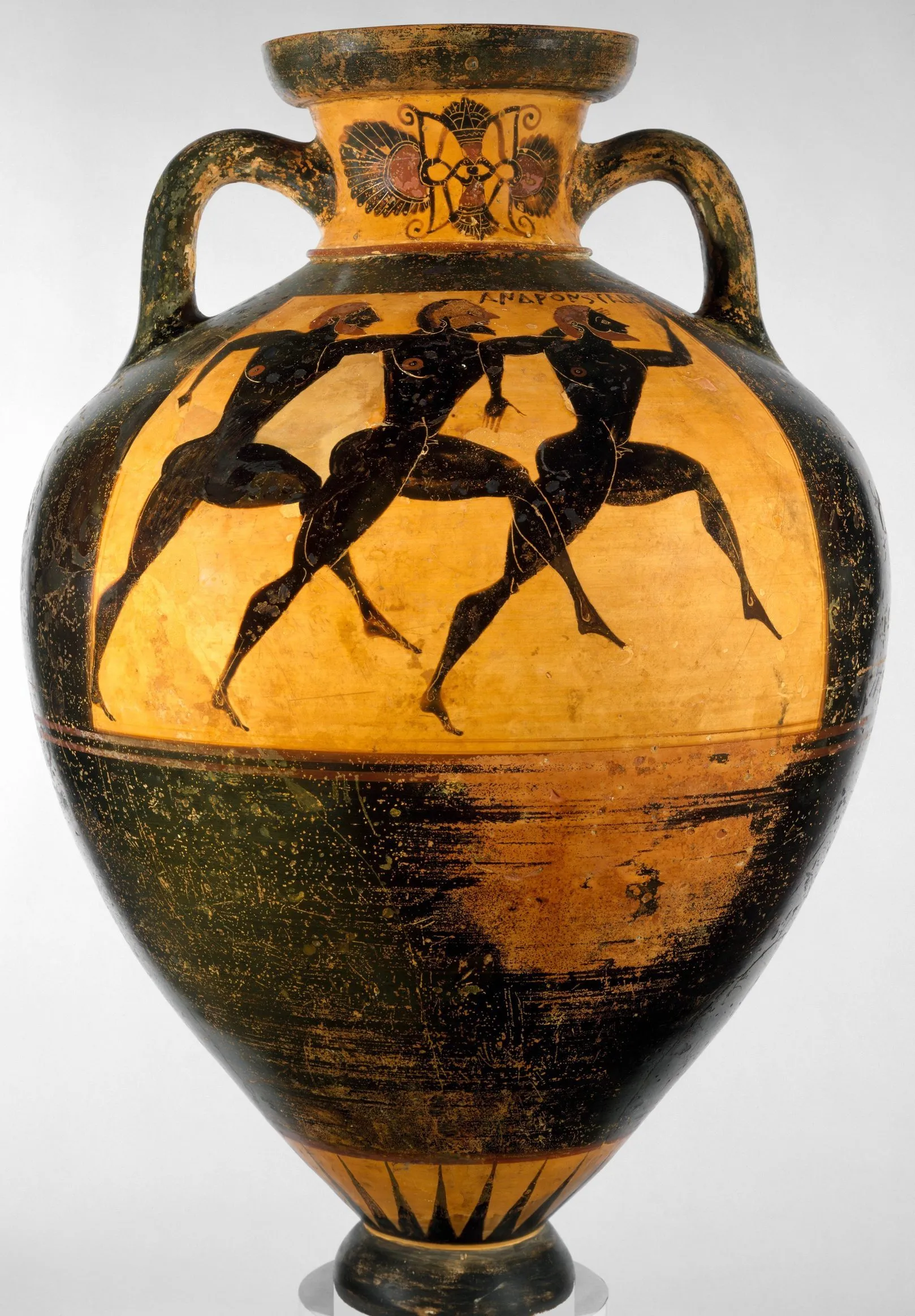
What particularly interests me is that many large Greek vases were not thrown as a single continuous form. They were assembled. The body and neck could be thrown separately, the foot attached later, and the handles added after the main sections had dried to leather hardness. There is something almost architectural about this process: neck, shoulder, belly, foot and handles stay visible as separate parts even though the pot is one object.
This is also a useful antidote to a certain kind of throwing purism. There is a tendency to treat the ability to make a pot in three pulls, without joining, altering or returning to it, as some kind of higher virtue. I admire that mastery enormously, but historically such mastery was also about speed, repetition and economy of labour. It is the virtuosity of production pottery. That is not quite what I am after. I am making individual objects, not optimising a production line. If a form is better made from two thrown sections, joined, carved, altered or partly handbuilt, I see no reason to submit it to an arbitrary test of throwing purity. Technique should serve the object, not the other way round.
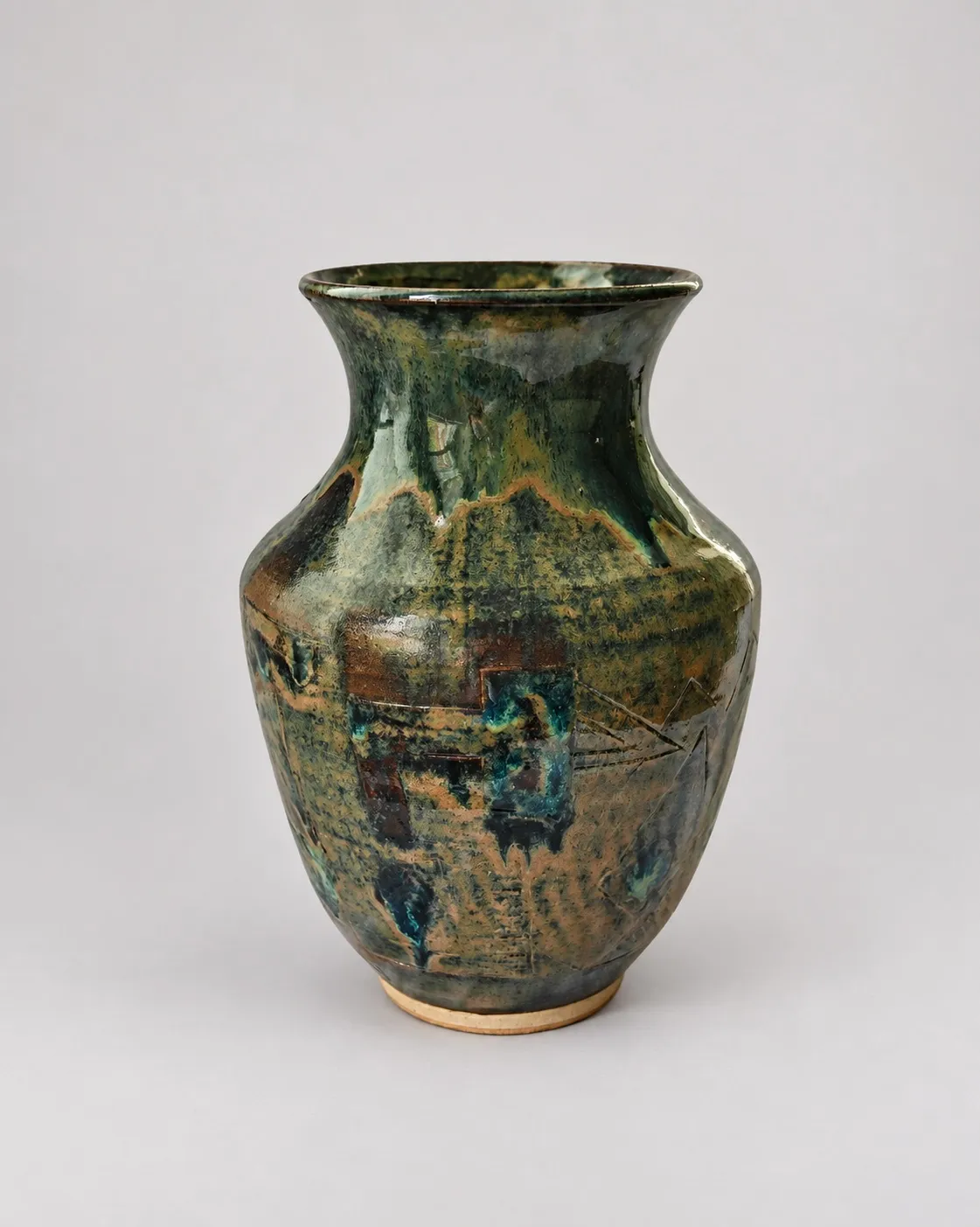
I sometimes throw separate pieces and join them into a single vase. It gives me freedoms that throwing in one piece does not, particularly in controlling the transition between sections and in making the proper carved foot.
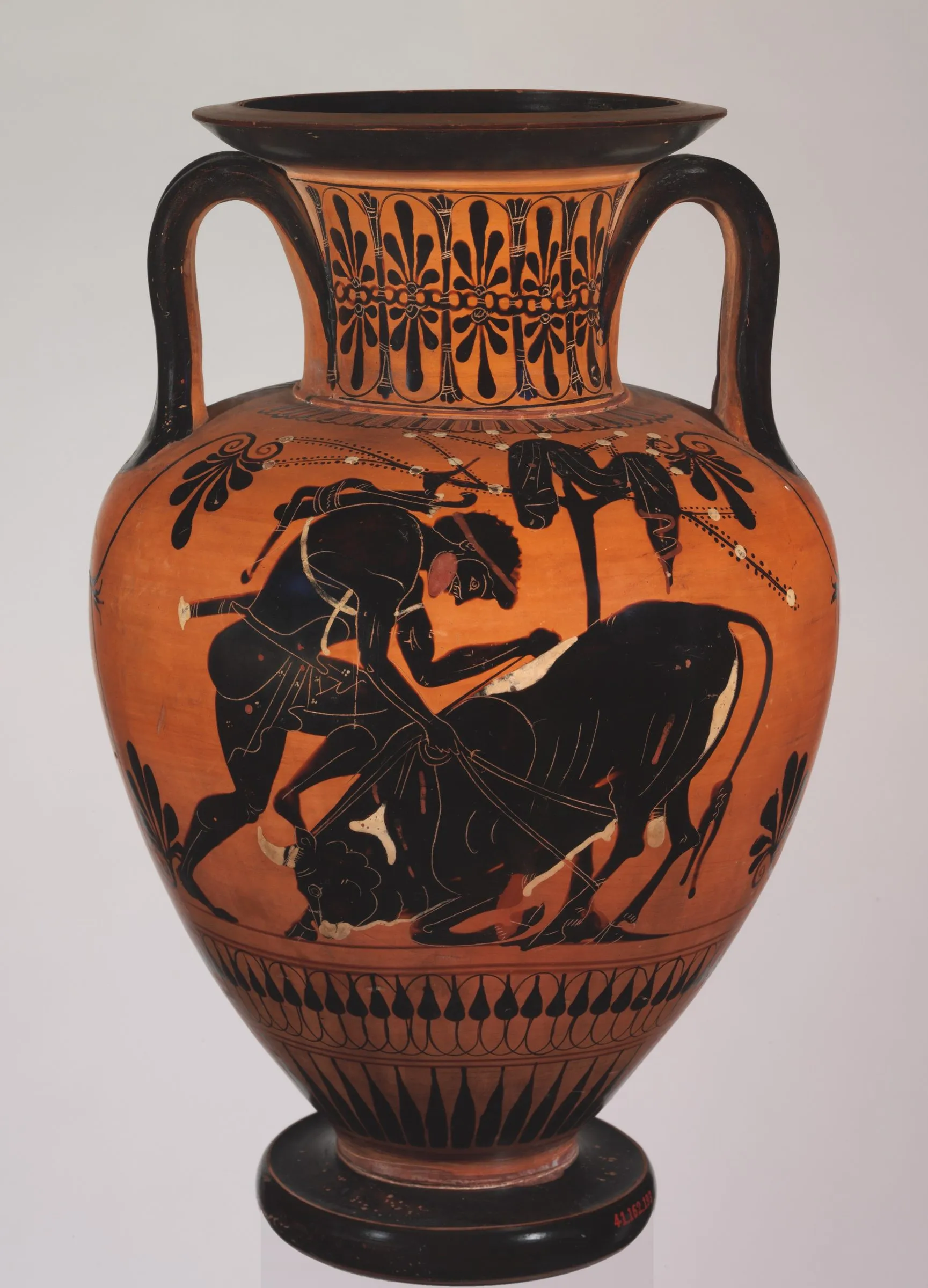
The Attic neck-amphora is perhaps the clearest expression of what attracts me. A neck-amphora is, by definition, an amphora in which the neck is visibly set off from the body rather than continuing seamlessly into it. The discontinuity is not a defect to be concealed. It is the form.
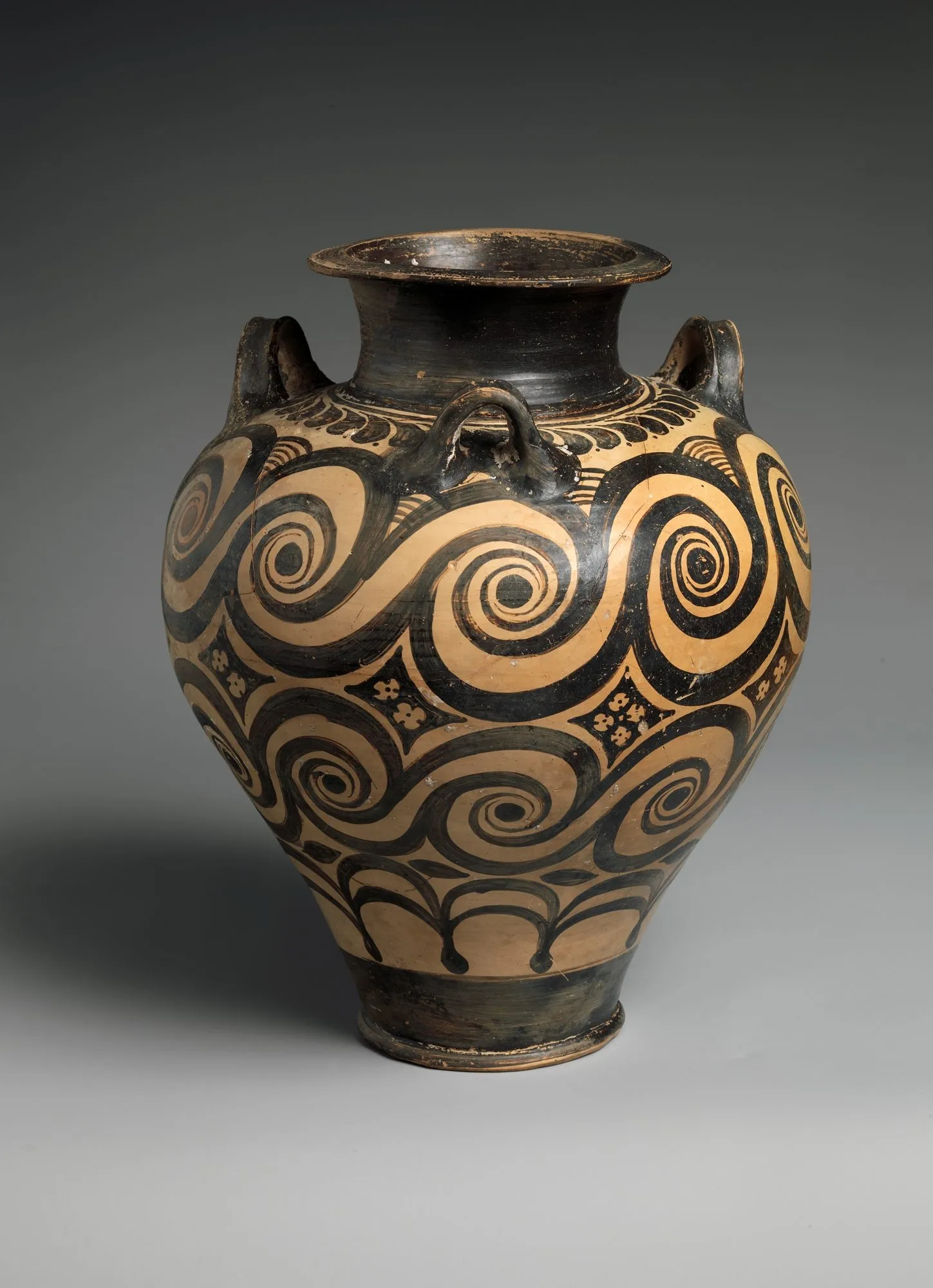
One of the two I picked turns out not to be Greek at all. It is a Minoan pithoid jar from Crete of about 1500 BCE, a thousand years earlier, and it pulls the other way: swelling, organic, continuous, closer to the Chinese vessels than to the Attic one. It also has three handles.
Ottoman Forms
There is usually some historical genealogy behind a form, but working out what came first in one’s own head is another matter. Egg and chicken have long since been scrambled. Bulbous Ottoman vessels certainly lurk somewhere in my subconscious, even if some better-informed observer immediately ruins the fun by pointing out that the Ottomans had been looking at Chinese pots too.
An Iznik vase of about 1575 captures much of what attracts me: a generous bulbous body, a narrow neck opening at the mouth, and a pronounced splaying foot. The Chinese influence is there, but by this stage it has been thoroughly absorbed into an Ottoman language of colour, flowers and form.
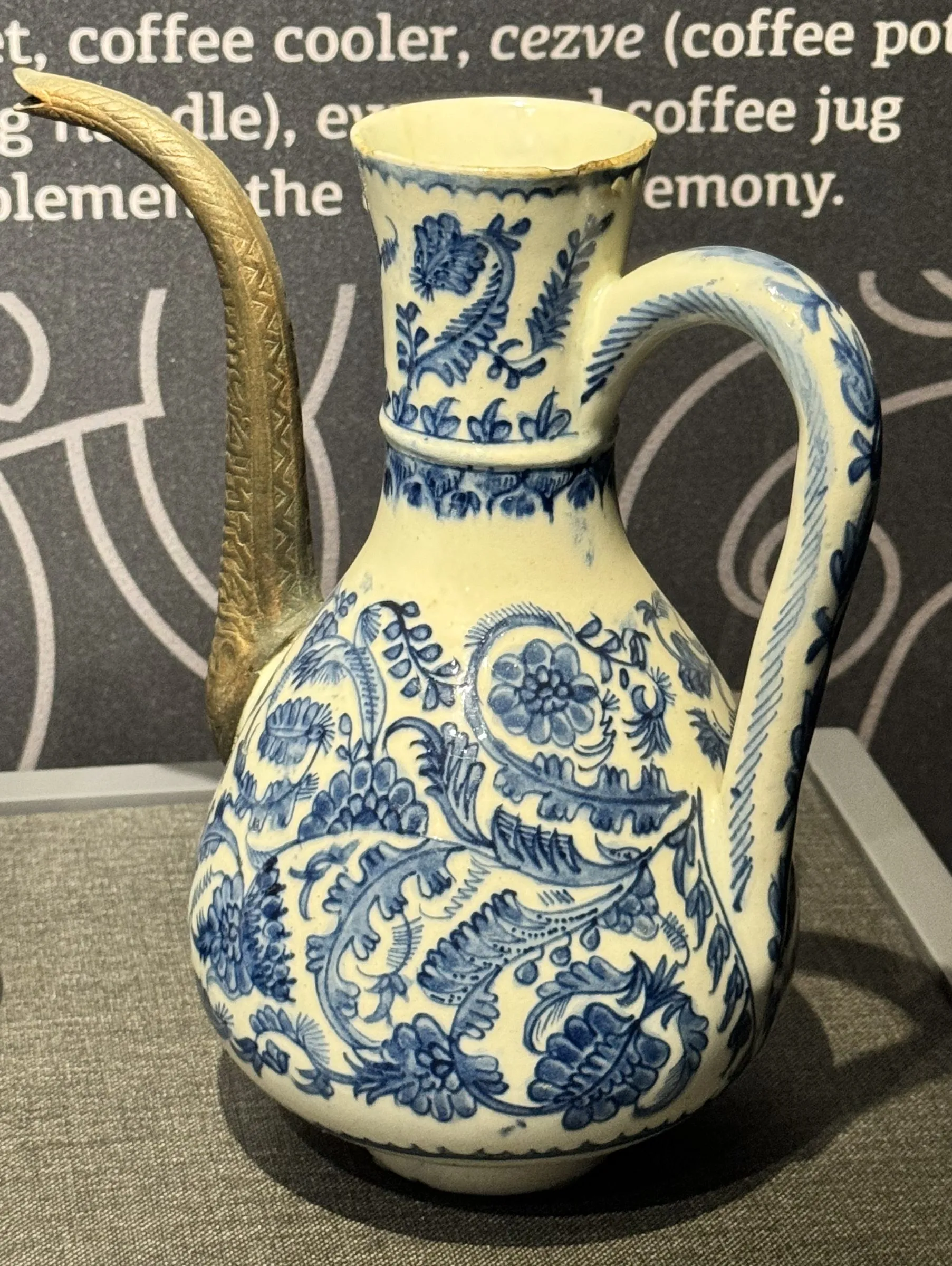
A few years ago I visited the Pera Museum in Istanbul, where this world of objects suddenly made much more sense together. Coffee culture helped generate and propagate a whole family of vessels: cups, holders, jugs, ewers and pots, often with swelling bodies, long necks, strong feet and projecting spouts. As Ottoman coffee culture spread west, so did some of this visual vocabulary.
Perhaps that is why these forms feel both exotic and strangely familiar. They reached Europe through trade, imitation and coffee culture, and by the time they reach my workshop any claim to a pure lineage is hopeless.
What stays with me more is how long these forms persist. If the Ottoman and Persian empires established a cultural legacy of their own, they also built it on their predecessors. Among those were the Sogdians, an Eastern Iranian people from Sogdiana in what is now Uzbekistan and Tajikistan, who from about AD 500 to 700 were among the great traders of the Silk Roads, moving goods from the Steppe to India and from China to the Mediterranean, before being assimilated into the Islamic world. Their name is largely forgotten now. Their shapes are not, and they did not travel only west.
Sogdian
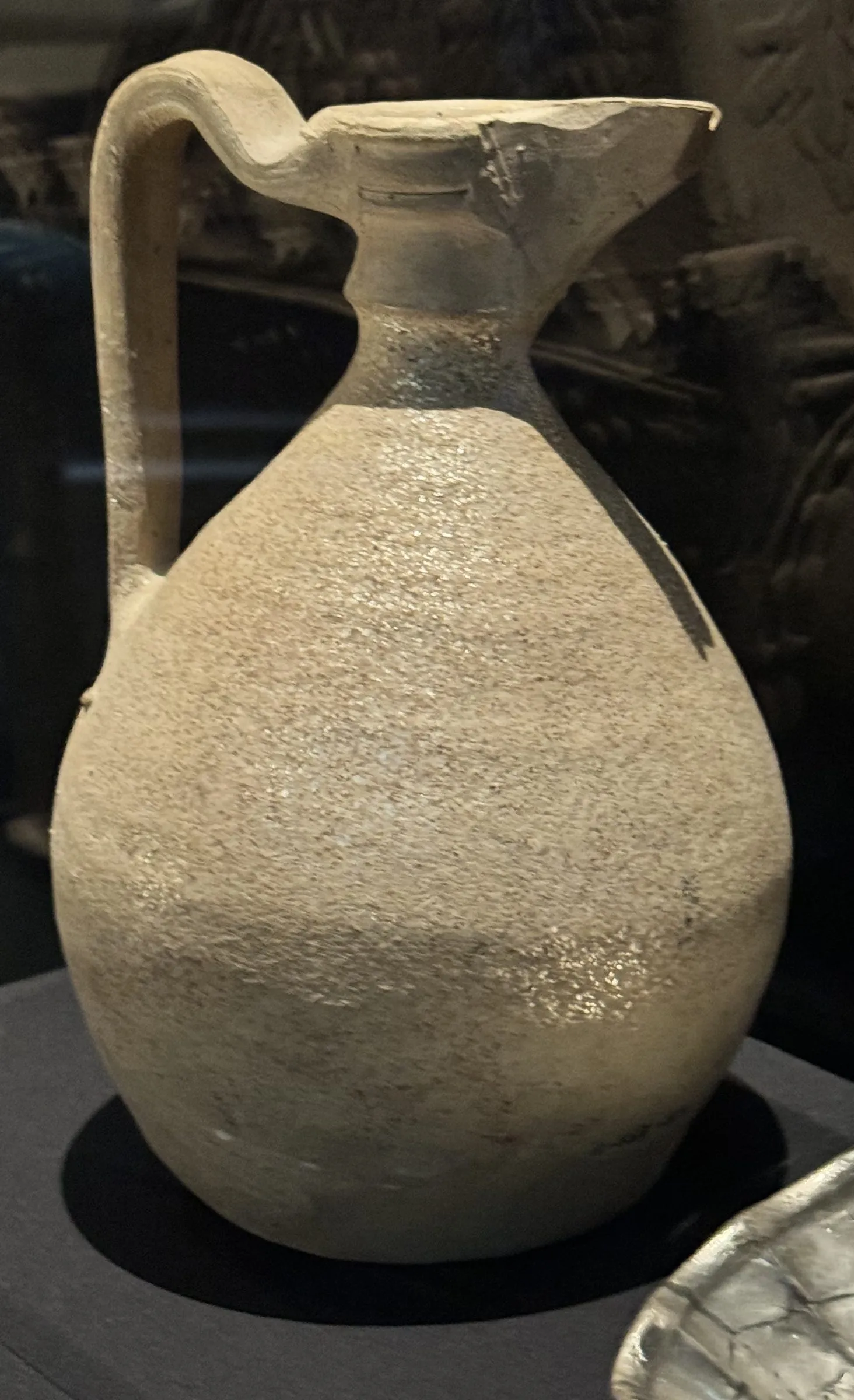
At the British Museum’s Silk Roads exhibition I photographed a mica clay jug from Kafir Kala, near Samarkand, made in the sixth or seventh century. A pear body, a pinched pouring lip, one strap handle, and a surface that glitters because there is mica in the clay.
Its label is the reason it is here. The curators state, quite plainly, that the shape and the metallic sheen imitate Sogdian metalwork, and that this type spread east to Tang China and inspired makers there. Everything else on this page points at China as the source. Here the British Museum turns the arrow round.
The Sogdians also got to that shape a thousand years before the Ottomans put the same form to work pouring coffee. But if the curators of a respected cultural institution can reverse the direction of travel of influences, I do not feel too bad about failing to keep it structured and tidy in my own head, when people ask what my influences are.
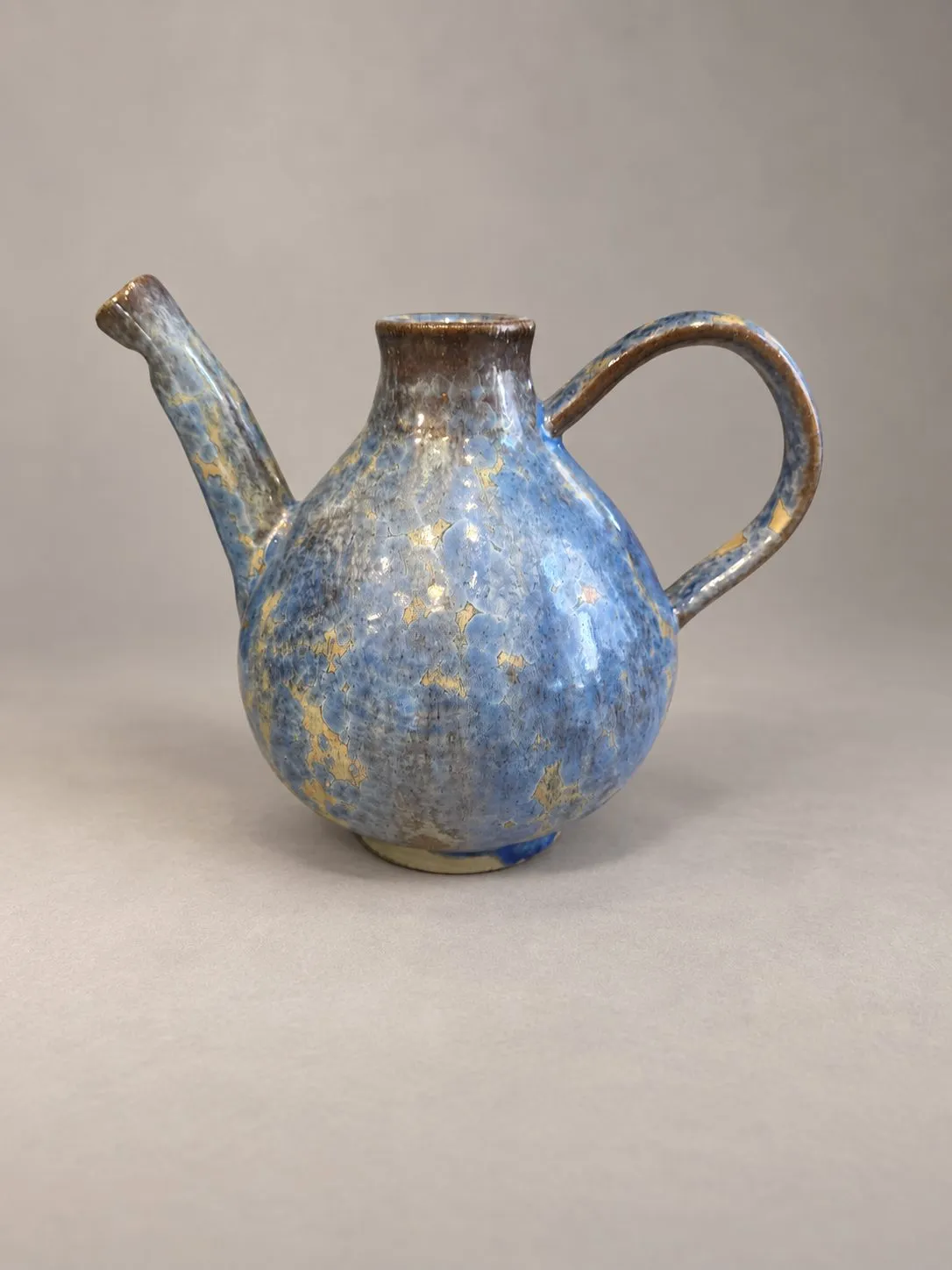
So when I am asked, “Where does your inspiration come from?”, the answer is increasingly difficult to give. History suggests that forms do not belong neatly to anyone. They travel, are borrowed, misunderstood, refined, adapted and rediscovered. By the time they reach my wheel, many have passed through countless other eyes and hands.
There is a familiar idea of authenticity as finding and expressing some true self hidden inside us. I am not sure I believe in that version, at least not when it comes to making pots. I am more interested in another kind of authenticity: accepting everything that is already there, the forms I have seen, the traditions I have absorbed, the limitations of clay and technique, and then seeing what happens when they pass through my own eye, hand and judgement at a particular moment.
Perhaps originality does not require discovering something inside oneself that nobody has ever found before. It may simply lie in the particular way a human mind and hand process what already exists. The sources can be ancient and openly acknowledged. The pot can still be mine.